
The Challenge
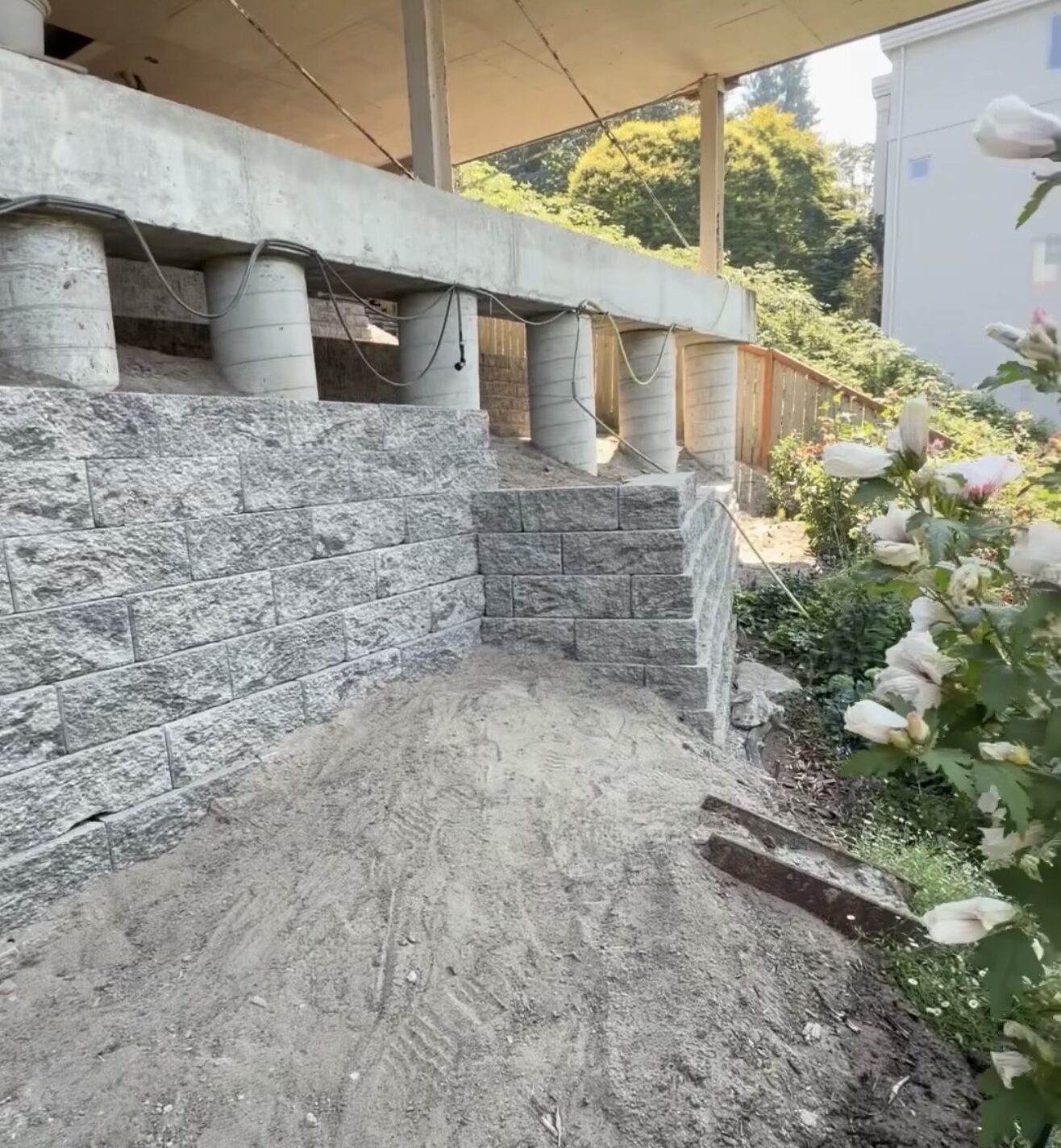
This Seattle homeowner faced a problem many hillside properties in the Pacific Northwest share: a very steep slope that was slowly giving way. Poor drainage sent water across the hillside with every rain, carrying soil with it and making the erosion worse each season. The yard was hard to use, and over time the instability could have put the home and its surroundings at risk.
The answer was a set of retaining walls that would hold the hillside in place, manage water runoff, and give the family usable outdoor space. The steepness of the site, though, made this far from a typical install.
Building Access First
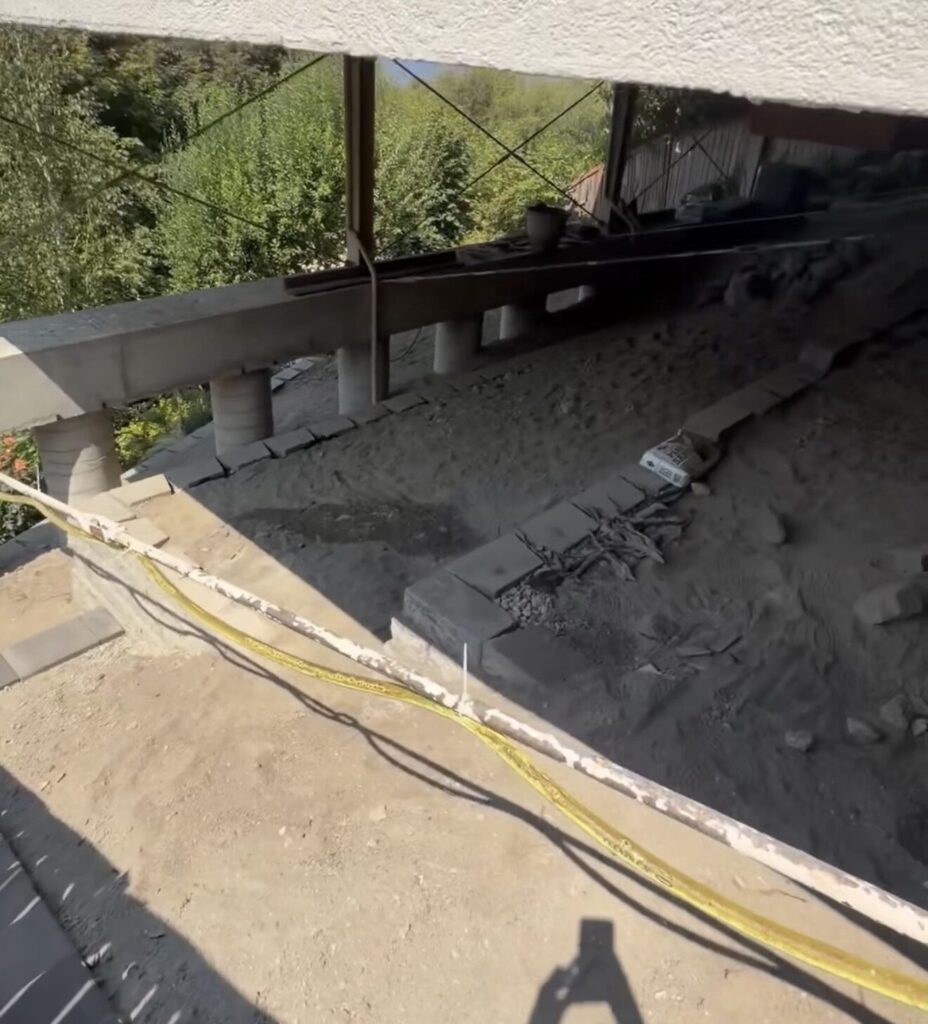
Before any retaining wall work could start, our crew had to solve a basic problem: how to get equipment and materials onto the slope safely. The terrain was too steep for standard access, so the team built a temporary ramp on site.
The ramp alone took three full days. It was dangerous, difficult work, and every step was planned with crew safety in mind. That upfront investment gave us a stable, controlled way to move materials up and down the hillside for the rest of the project.
Building From the Bottom Up
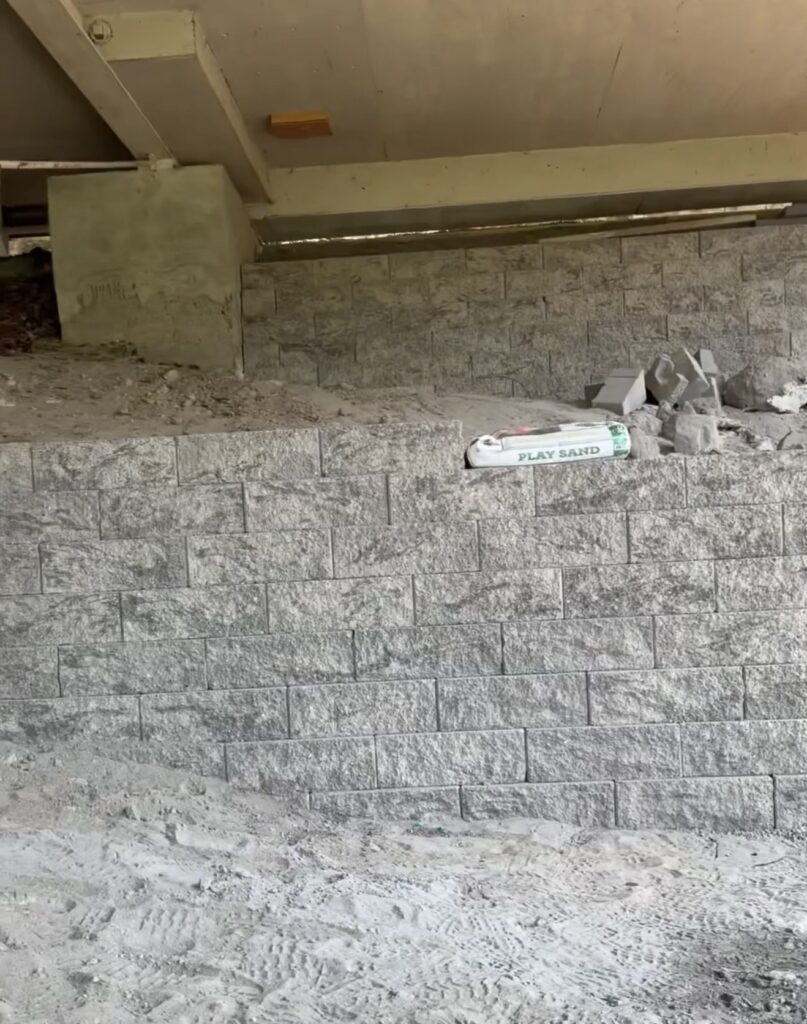
With access in place, the team started the retaining walls. To stop erosion for good, we built from the bottom of the slope upward. Starting at the base gave each new wall a solid foundation and kept the soil stable as work moved up the hill, so we never left loose ground exposed above unfinished sections.
At the same time, we fixed the drainage problem at its source. Redirecting water away from the slope removed the main cause of the erosion and protected the new walls from the pressure that builds up behind poorly drained structures.
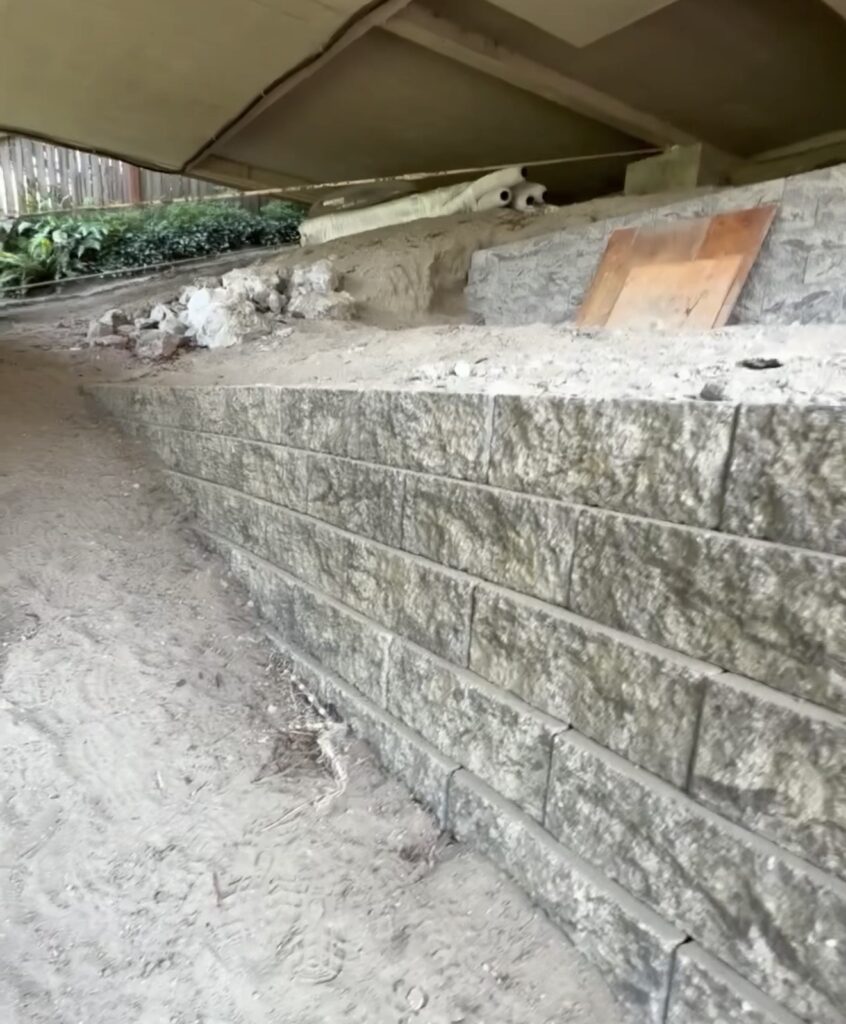
In less than one month, our crew completed five to six retaining walls, a fast timeline given the site conditions and the care the work required.
Safety at Every Step
Steep-slope construction leaves no room for shortcuts. Throughout the project, our team stayed focused on safety: planning each phase carefully, securing materials and equipment on the grade, and making sure every crew member worked under controlled conditions. That discipline let us move efficiently without putting anyone at risk.
Restoring Access for the Family
Once the walls were in, the homeowners found that the new layout made it harder to get to and around the house. Rather than leave them with a stable yard they couldn’t easily use, our team designed and built steps and pathways across the property.
The new walkways connect the home to the newly terraced yard, giving the family safe, comfortable access to every level of their outdoor space.
The Results
What started as an eroding, hard-to-use hillside is now a stable, well-drained, terraced landscape. The drainage issue is solved, the erosion has stopped, and the family has outdoor space they can enjoy.
The homeowners are much happier with their new yard, and they’re already planning what’s next. They’re considering adding a putting green, something that wouldn’t have been possible on the old slope.
Project Highlights
- Location: Seattle, WA
- Scope: 5 to 6 retaining walls, a temporary access ramp, drainage correction, steps and pathways
- Timeline: Under one month for wall construction
- Outcome: Erosion stopped, drainage fixed, full yard access restored
Dealing With a Steep or Eroding Slope?
Every hillside is different, and the right solution starts with seeing it in person. Angel walks your property, assesses the slope, soil, drainage, and access, and gives you an honest picture of your options.